
Succession Planning
A complete system for identifying, evaluating, and developing the next generation of IT leadership.
Why it matters
Every board and CEO eventually asks an IT leader the same question: what happens if a key person leaves tomorrow? Readiness isn't a feeling, it's a measurable gap between where a candidate stands today and what the role actually requires.
Who it's for
Experienced leaders approaching the next step. The focus is strengthening the enterprise leadership qualities that influence CEO and board-level selection decisions.
VPs of Technology or IT preparing for a first CIO role
Senior technology leaders operating as de facto CIOs
Internal CIO successors being considered for the next step
Leaders who've reached finalist stages but haven't yet been selected
CIOs in smaller organizations preparing for larger enterprise roles
Leaders transitioning into enterprise leadership responsibilities
Not designed for early-career technology managers or leaders whose primary need is technical development.
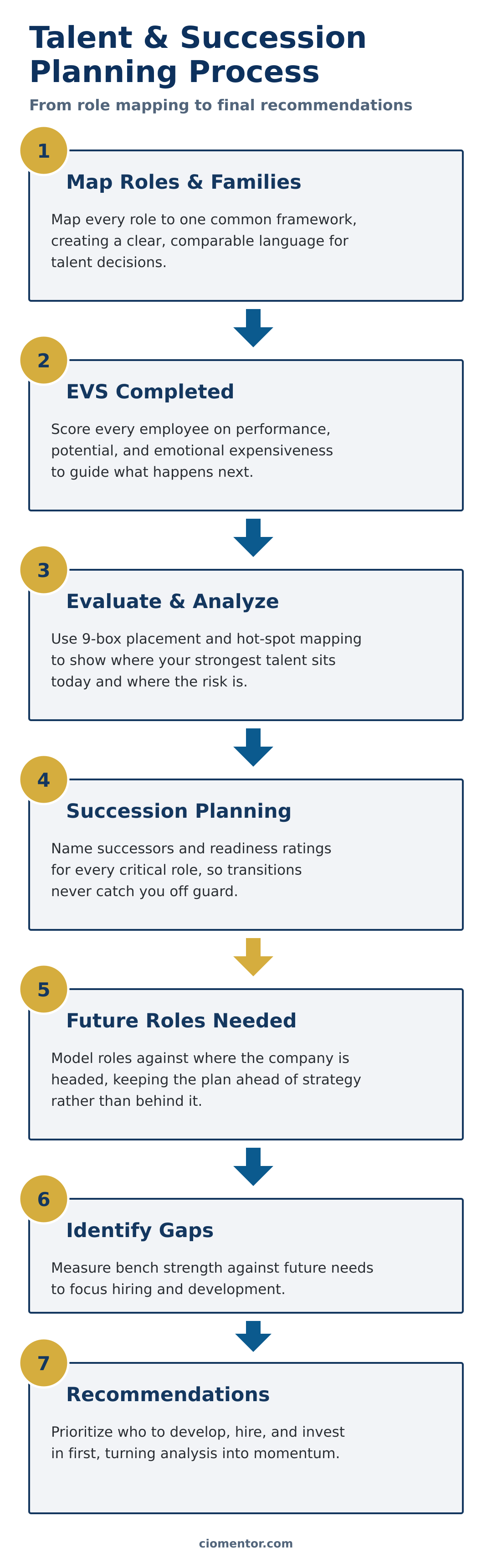
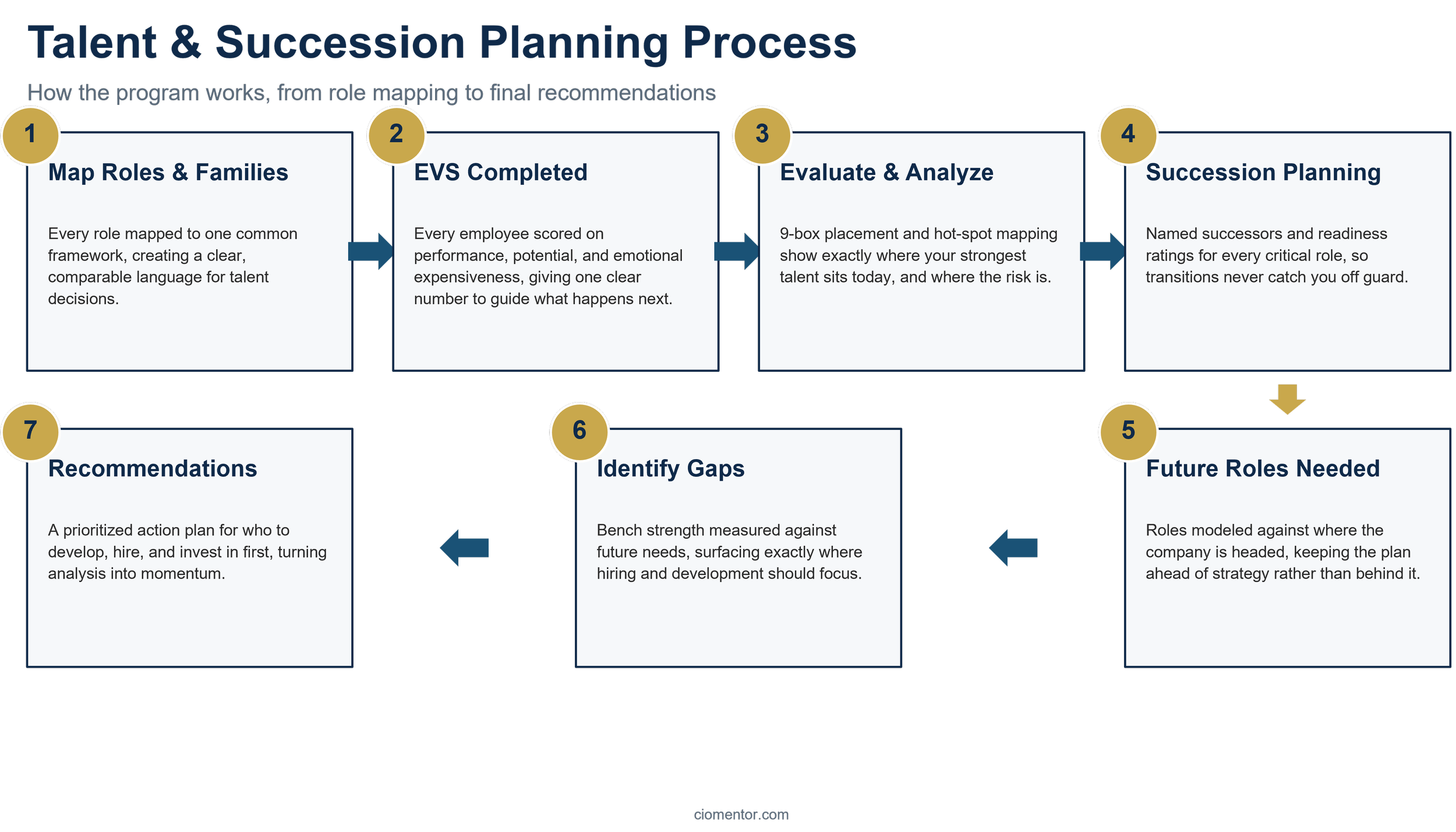
How it works — seven stages
What you leave with — Five tools
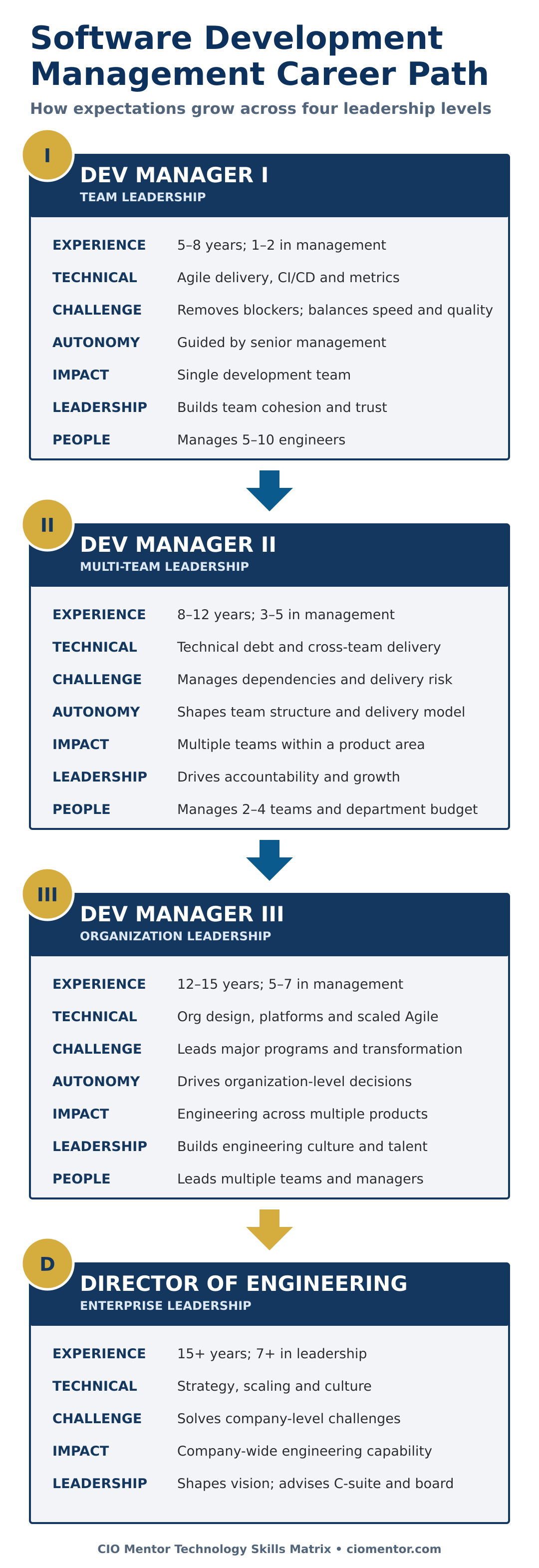
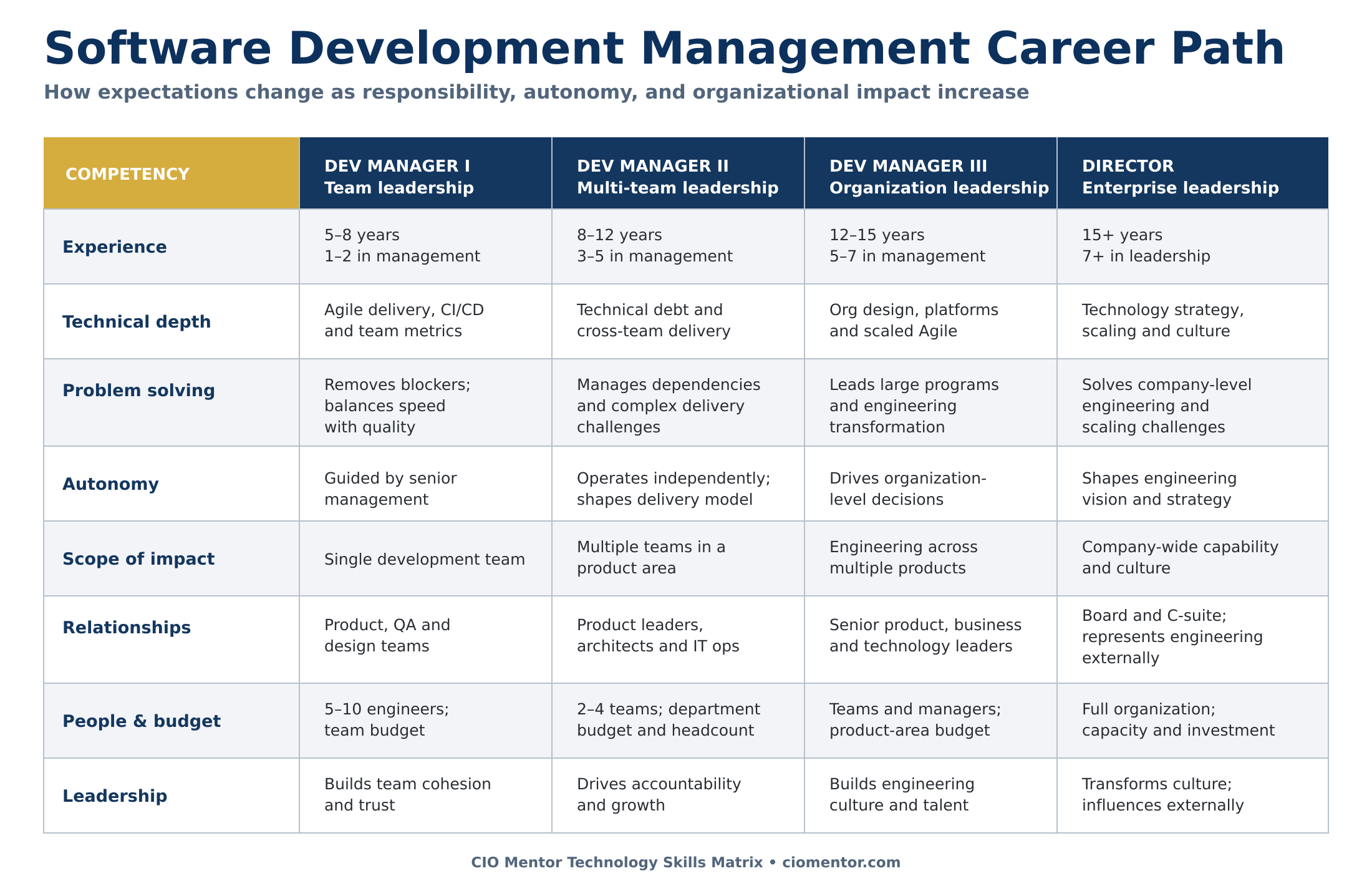
IT Skills Matrix — competency benchmarks across 51 IT roles and four levels.
Employee Value Scoring (Individual Contributor & Leaders) — a scored read on performance, potential, and cost. Also listed individually in the Assessment Library.
Team 9-Box View — a visual map of the team's talent landscape.
Critical Role Profile — a per-role succession slate with readiness gaps.
Bench Strength Dashboard — an org-level view of succession health and risk.
The program begins with a conversation. If this is the right time and the right fit, that conversation will make both clear.