
Demand Governance Program
Your technology portfolio is already being managed. Just not by you.
Most executive teams that feel overloaded already have governance: steering committees, prioritization forums, executive sponsors. On paper, everything that should create control is in place.
And yet work keeps appearing that nobody remembers approving. Organizations that believe they run thirty or forty applications routinely find several hundred, sometimes over nine hundred, once someone actually counts. The gap between what leaders believe they govern and what they actually govern isn't an exception. It's the structural result of distributed decisions with no enterprise-level reconciliation.
This program, built on the book The System No One Sees, installs the system that closes that gap.
Why it Solves
The system running beneath the org chart
Cloud platforms and agile delivery gave business leaders direct control over technology decisions IT once owned. That was mostly the right call. What it didn't preserve was enterprise-level visibility, the coordinating function that let leaders see their decisions in aggregate before commitments piled up.
This program restores that visibility by connecting three domains most organizations allow to blur together.
Decide
Demand shaping. Ensuring the right work enters the system in the first place.
Commit
Portfolio decisions about capacity, sequencing, and risk that protect teams and outcomes.
Deliver
Execution and value realization. Confident delivery of outcomes, not just completed work.
No other role combines the technical depth, enterprise view, and outcome accountability to own this the way a CIO can. This program is how that ownership becomes real and operational, not aspirational.
Who it’s For
Built for the organization, not just the CIO
This is a governance engagement, not individual coaching. It works best when it involves the people who actually shape and commit technology demand.
CIOs accountable for a portfolio they can't fully see, including work that never entered formal governance
CEOs and CFOs ready to mandate the system and sponsor its adoption, not just approve it in a memo
Organizations where technology purchasing has spread across business units without enterprise-level reconciliation
Leaders tired of adding another prioritization meeting that never actually improves prioritization
Not designed as a project management tool rollout or a single software purchase. This is a change in who owns decision rights and how demand gets shaped before it ever reaches a portfolio review.
The Program
Nint y Days. Five Modules. One System.
A structured installation, not a series of coaching conversations. Each module builds the next layer of the governance engine, working directly with the CIO, portfolio and PMO leadership, and the executive sponsors whose mandate the system depends on.
1. See the System
Quantify what ungoverned demand is actually costing the organization today, before anyone agrees to change anything.
Outputs: Hidden Demand Audit, Demand Governance ROI Calculator
2. Shape the Demand
Separate strategic demand from operational demand and secure the executive mandate the rest of the system depends on.
Outputs: Demand Shaping Policy, CEO/CFO sponsorship commitment
3. Design the Architecture
Establish decision rights, define the roles the system depends on, and design the governance engine itself.
Outputs: Decision Rights Matrix, Role Accountability Map, Modern PMO Charter
4. Run the System
Put prioritization discipline and real capacity constraints into practice under actual organizational pressure.
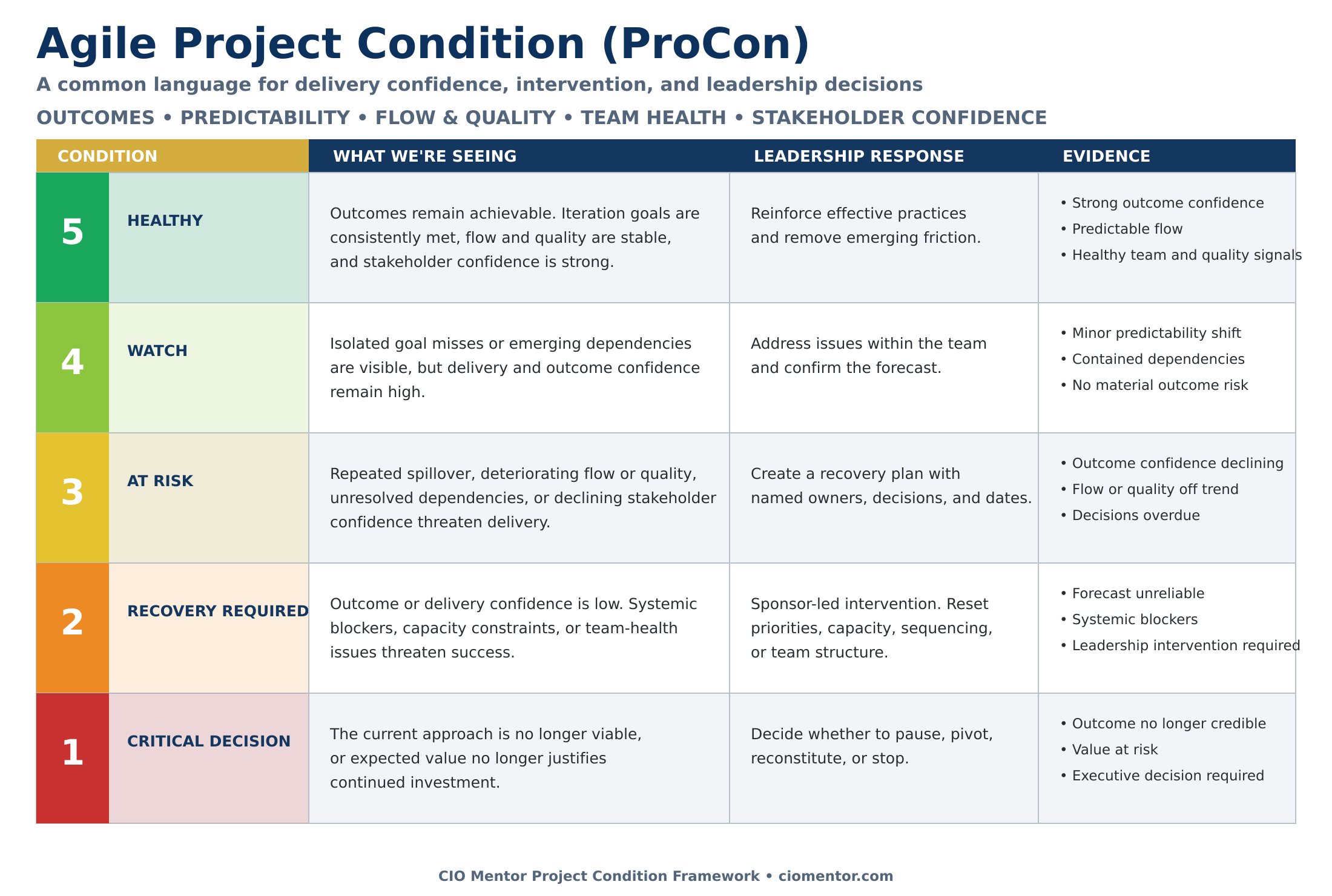
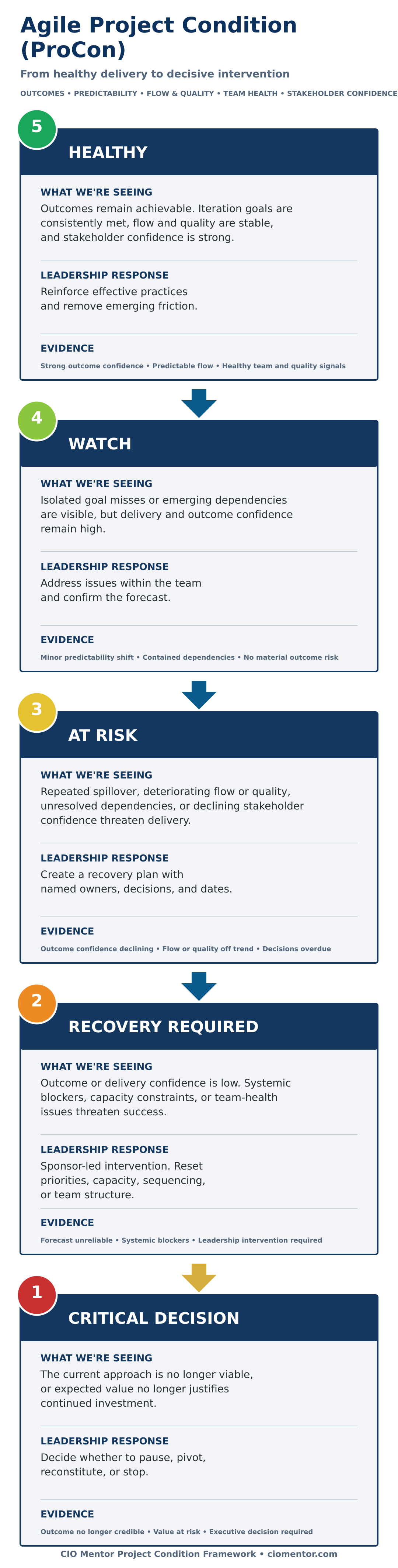
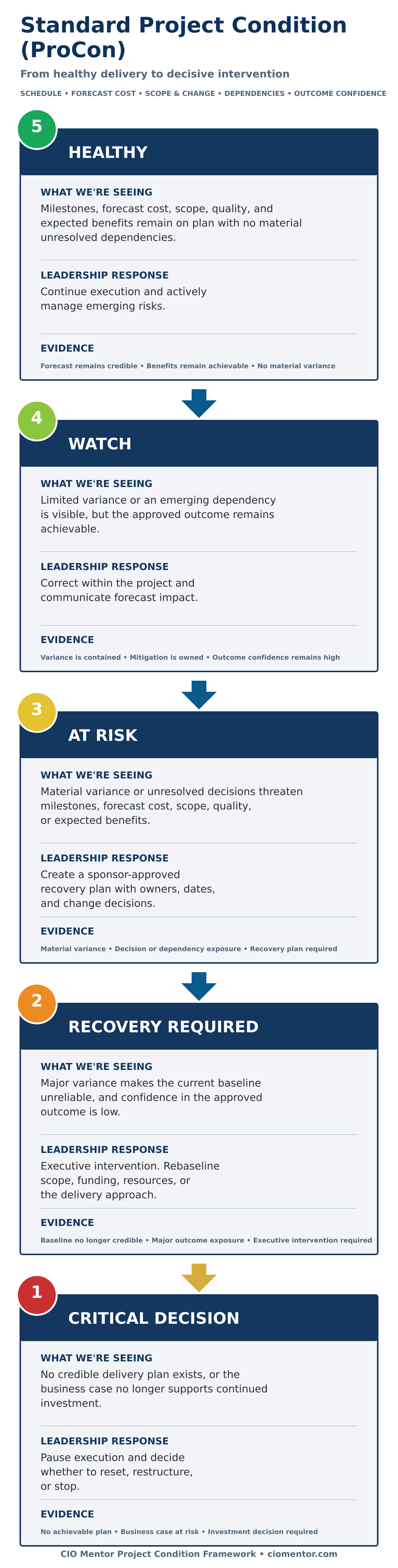
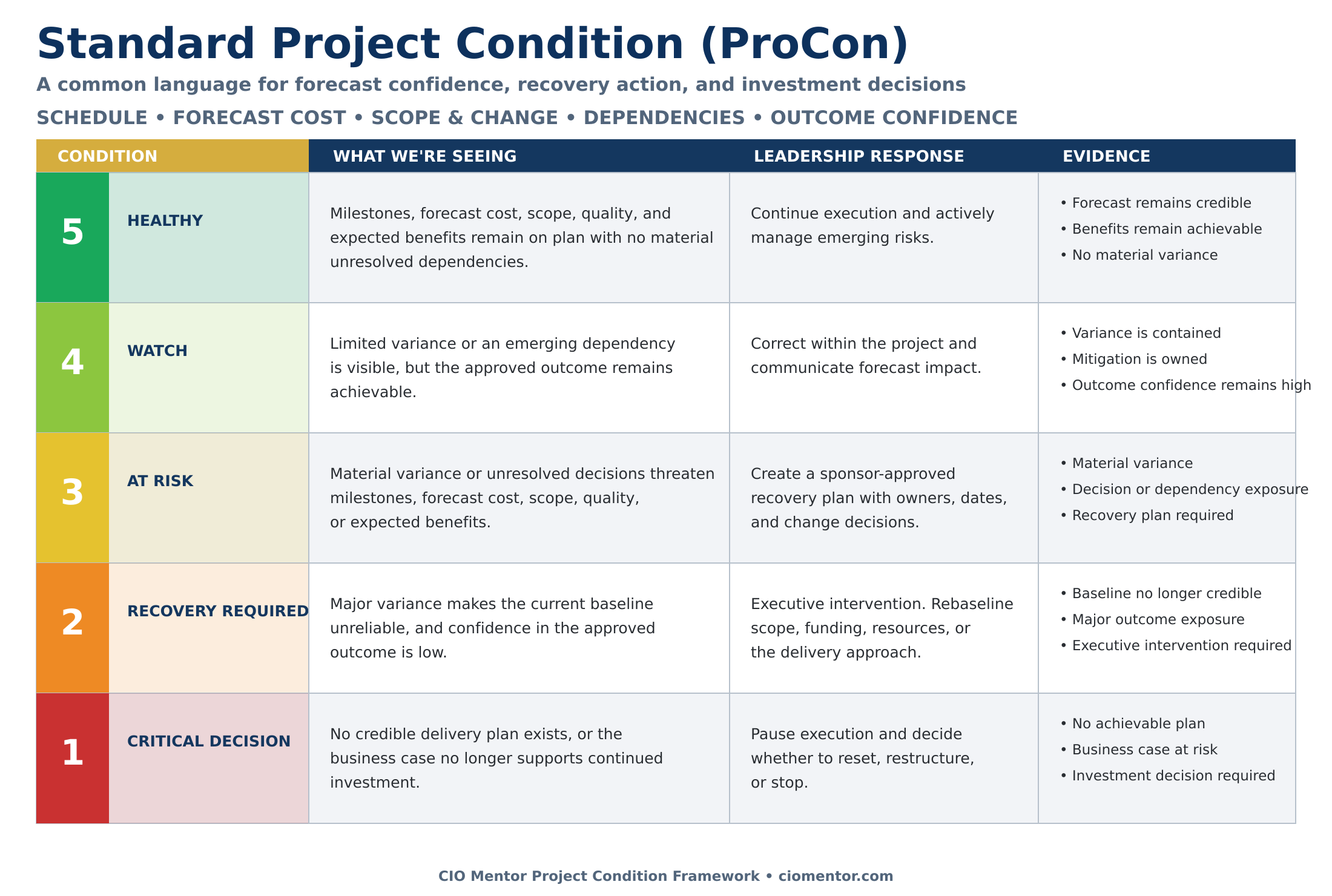
Outputs: Capacity Loading Model, ProCon health scale in active use
5. Prove the Value
Shift from tracking completion to tracking outcomes, and put a governance cadence in place that outlives the engagement.
Outputs: Value Realization Model, standing Monthly Governance Forum
What You Leave With
A Working system, not a binder.
Demand Governance ROI Calculator
Quantifies what ungoverned technology demand is costing the organization today, built to hold up in an executive conversation, not just a workshop.
Decision Rights Matrix
A clear, adopted map of who owns which technology decisions, and at what threshold a decision needs to move up.
ProCon Health Scale
A structured, four-criteria alternative to red-yellow-green status reporting, so governance conversations focus on decisions instead of interpretation.
First-90-Days Roadmap
The sequence for standing up the system without stalling in committee, adapted to your organization's starting point.
Based on The System No One Sees by Joseph Topinka. The book lays out the full model; this program installs it in your organization.
Where does your portfolio actually stand?
A short conversation about the parts of your technology portfolio no one currently sees is usually where this starts.